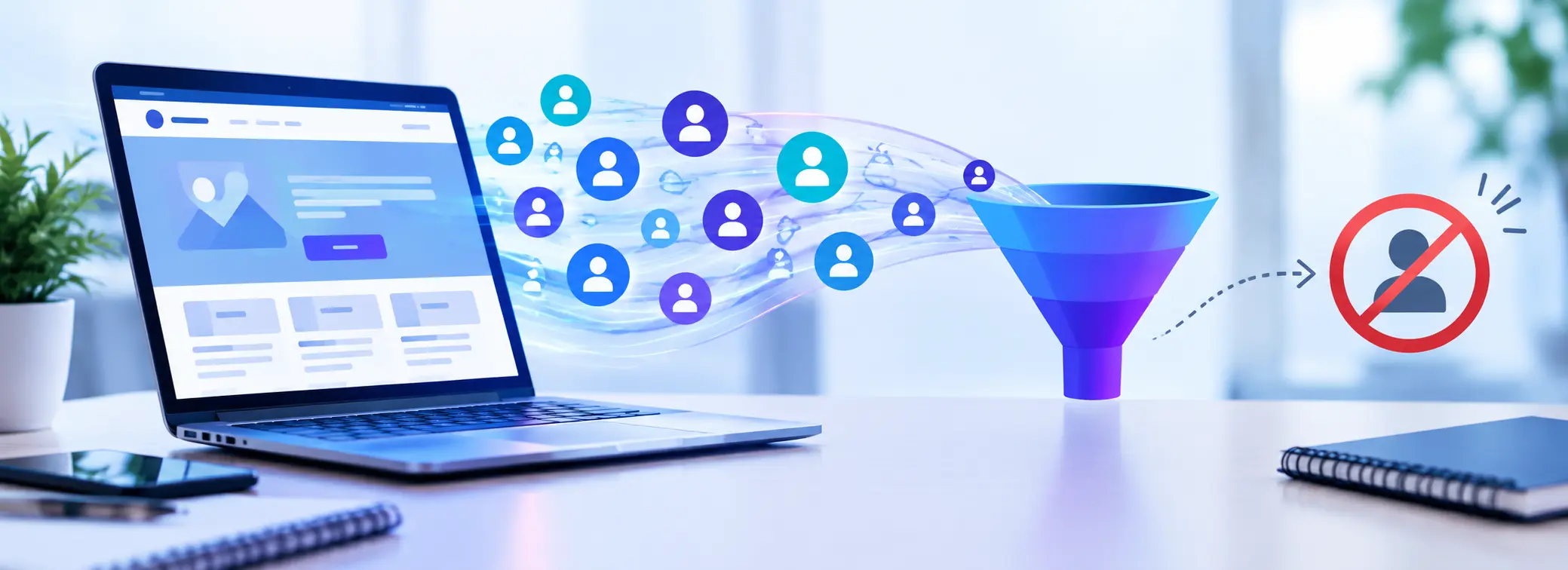
Your website may be online. It may look perfectly fine. People may even be visiting it.
But there is one important question every business owner should ask:
How many of those visitors are actually becoming customers?
If people are visiting your website but not calling, enquiring, booking or buying, your website may be losing customers without you even realising it.
And the worst part?
Those customers are probably not telling you why they left. They are simply choosing a competitor instead.
Your Website Is Often Your First Sales Conversation
When a potential customer finds your business through Google, social media or an advertisement, your website is often the next place they go.
Within seconds, they form an opinion about your business.
They are thinking:
Can I trust this business?
Do they offer what I need?
Does this business look professional?
Why should I choose them instead of their competitor?
Your website needs to answer these questions quickly.
Within seconds, potential customers are deciding whether they trust your business enough to contact you.
If your website does not communicate the right message quickly, the customer may simply leave and look for another business.
An Outdated Website Can Cost You Business
You may know that your business provides an excellent service. Your existing customers may love you. You may have years of experience and many happy customers.
But a new visitor does not know any of that.
They judge what they can see.
If your website looks like it has not been updated for years, contains outdated information, is difficult to navigate or does not work properly on mobile devices, potential customers may question the quality of your business.
“If their website is not looked after, will their service be any different?”
That may not be fair, but this is how customers make decisions online. Your website is part of your business image, whether you realise it or not.
More Website Traffic Is Not Always the Answer
This is where many businesses make a costly mistake.
They think:
“I need more visitors.”
So they spend money on Google Ads, SEO, social media and other marketing.
But what happens if your website is already losing a large percentage of the people who visit?
You simply send more potential customers into the same problem.
Marketing gets people through the door. Your website needs to convince them to stay.
If your website does not communicate your value, build trust and guide visitors towards taking action, more traffic may simply mean more people leaving.
Why Are People Leaving Without Contacting You?
There are many possible reasons. Here are five of the most common.
1. They Cannot Understand What You Offer
Your homepage should make it immediately clear:
What do you do? Who do you help? And why should someone choose you?
If visitors have to search for these answers, you are already making the buying process harder than it needs to be.
2. Your Website Does Not Build Enough Trust
People do not want to take unnecessary risks with their money.
They want to see reviews, testimonials, experience, qualifications, case studies, guarantees or other evidence that you are a genuine and reliable business.
Without trust, even an interested visitor may leave.
3. Your Website Looks Outdated
Design trends change. More importantly, customer expectations change.
A website that looked professional five or ten years ago may now make your business appear behind your competitors.
Your website does not need to follow every design trend, but it should look current, professional and trustworthy.
4. Your Website Is Difficult to Use on Mobile
A large number of potential customers will visit your website from their phone.
If the text is difficult to read, buttons are hard to click, pages load slowly or visitors have to zoom in and out, they may simply leave.
A mobile-friendly website is no longer an optional extra. It is essential.
5. There Is No Clear Next Step
Imagine a customer likes what you offer.
What should they do next?
Call you?
Request a quote?
Book an appointment?
Send a message?
Buy online?
If the answer is not obvious, you are leaving the customer to figure it out themselves.
And many will not bother.
Your Website Should Work Like Your Best Salesperson
Your website should be working for your business even when you are asleep.
It should:
Attract attention → Build trust → Explain your value → Remove doubts → Encourage action.
That does not mean your website needs to be complicated.
It needs to be clear, professional, fast, easy to use and focused on your customer’s needs.
A beautiful website is not enough.
A website that generates business is what matters.
Ask Yourself One Important Question
Do not ask:
“Do I like my website?”
Ask:
“Would a new customer trust my business enough to contact me after visiting my website?”
That is a much more important question.
Your website may not look broken. It may even look perfectly fine to you.
But if visitors are leaving without taking action, there is a problem.
And every day that problem remains, you could be losing potential customers to competitors.
Your Website Should Not Just Exist. It Should Generate Business.
If you are investing time and money into getting people to your website, make sure your website is giving them a reason to stay.
Your next customer could already be searching for your service.
When they find your website, will they choose you or your competitor?
Is Your Website Losing You Customers?
Find out what could be stopping your website from generating more enquiries and sales.
Book a 1-to-1 Website Review and discover what is working, what is not, and what you can improve to turn more visitors into customers.
Your website is getting visitors, your SEO efforts are bringing traffic, and your marketing campaigns are generating clicks. But there is one problem: you are not receiving enough enquiries, quote requests, or potential customers.
If your website gets traffic but no leads, increasing your marketing budget may not be the right solution. The problem could be what happens after visitors land on your website.
A website should do more than attract visitors. It should help potential customers understand your services, build confidence in your business, answer their questions, and make it easy for them to get in touch.
In this guide, we will explore 12 common reasons why websites fail to generate leads and explain how to fix them to improve website conversions.
1. You Are Attracting the Wrong Website Traffic
More website traffic does not automatically mean more customers.
Your website might receive visitors from search engines, social media, or paid advertising, but that traffic may not match your target audience. Some visitors might be looking for free information, while others may need services you do not offer.
For example, a company offering professional WordPress development may attract visitors searching for free website templates. Although these visitors contribute to traffic numbers, they may have little interest in hiring a development team.
How to fix it:
Identify the keywords your potential customers use when searching for your services.
Focus on relevant, service-related search terms.
Review the search queries and advertising campaigns bringing visitors to your website.
Target appropriate locations, industries, and customer groups.
Create landing pages that address specific customer needs.
Effective SEO is not just about attracting more visitors. It is about attracting visitors who are more likely to become customers.
2. Your Landing Page Does Not Match Visitor Intent
Imagine someone searches for website redesign services and clicks your advertisement. Instead of landing on a page explaining your redesign service, they arrive at a generic homepage with little relevant information.
They now have to search your website to find what they originally wanted. This disconnect between a visitor’s expectations and your landing page can reduce the chances of conversion.
How to fix it:
Match your landing page content to the keywords and advertisements attracting visitors.
Use a clear headline that reflects the visitor’s needs.
Explain the relevant service and its benefits near the top of the page.
Keep the next step easy to find.
Remove unnecessary distractions that take attention away from the page’s primary goal.
For example, a Google Ads campaign promoting WooCommerce development should direct visitors to a relevant WooCommerce service page rather than a general homepage.
A relevant landing page helps visitors find what they need without unnecessary effort.
3. Your Website Does Not Clearly Explain Why Customers Should Choose You
Visitors may understand what your business offers but still have no compelling reason to choose you over your competitors.
Statements such as “We provide quality services” or “We are committed to excellence” do little to differentiate your business because almost every company can make similar claims.
Your website needs to communicate a clear value proposition.
How to fix it:
Explain the specific problems your business solves.
Highlight the benefits customers receive.
Communicate what makes your approach different.
Support your claims with relevant experience, examples, or genuine customer feedback.
Make your value proposition visible on your homepage and key service pages.
For example, instead of simply saying you provide WordPress development, explain how your team can improve website usability, performance, security, and ongoing reliability.
The goal is to help potential customers understand not just what you do, but why your service is worth considering.
4. Your Website Does Not Build Enough Trust
Before contacting a business, potential customers often look for evidence that the company is credible, experienced, and capable of delivering what it promises.
If your website looks outdated, contains incomplete information, or lacks meaningful proof of your experience, visitors may hesitate to enquire.
This is especially important for businesses offering professional services, where customers may need to invest significant time or money.
How to fix it:
Display genuine customer testimonials and reviews.
Showcase relevant projects and case studies.
Explain your experience and working process.
Provide clear contact details and business information.
Keep your website content accurate and up to date.
Maintain website security and display an appropriate HTTPS connection.
Avoid unsupported claims or fabricated reviews. Genuine evidence of your work is more persuasive than exaggerated marketing statements.
A professional, trustworthy website gives potential customers more confidence in taking the next step.
5. Your Website Design Makes a Poor First Impression
Your website design influences how visitors perceive your business.
An outdated layout, inconsistent branding, cluttered pages, poor typography, or low-quality images can make your company appear less professional than it really is.
Even if your services are excellent, a poor website experience may prevent visitors from exploring them further.
How to fix it:
Use a clean, consistent, professional design.
Make navigation simple and intuitive.
Use readable typography and appropriate spacing.
Ensure your brand identity is consistent across important pages.
Remove outdated content and unnecessary visual elements.
Make your main services and contact options easy to find.
However, an attractive website alone will not guarantee more leads. Design improvements should support clear messaging, usability, credibility, and conversion goals.
If several aspects of your website are outdated or difficult to use, a professional website redesign may be worth considering.
6. Your Calls to Action Are Weak or Difficult to Find
A visitor may be interested in your services but leave without contacting you simply because the next step is unclear.
Your website should guide visitors towards an appropriate action instead of expecting them to figure out what to do.
Generic buttons such as “Learn More” may be suitable in some situations, but more specific wording can communicate the value of taking action.
How to fix it:
Get a Free Website Review
Request a Quote
Book a Consultation
Discuss Your Project
Talk to Our Team
Place calls to action where visitors are likely to need them, including near the top of your homepage, on service pages, and after important explanations.
Choose wording that matches the commitment you are asking visitors to make. Someone who is still researching may prefer a free review, while someone ready to proceed may want to request a quote.
Make the next step clear without overwhelming visitors with too many competing buttons.
7. Visitors Have Unanswered Questions About Price, Process, or Results
Potential customers often leave a website because they cannot find enough information to make a decision.
They may wonder how much your service costs, what is included, how long the project will take, or what happens after they contact you.
When important questions remain unanswered, visitors may postpone their decision or approach a competitor who explains things more clearly.
How to fix it:
Explain what your service includes.
Describe your process and typical project stages.
Provide pricing guidance or package information where appropriate.
Answer frequently asked questions.
Explain what information you need from prospective customers.
Set realistic expectations about deliverables and timelines.
You do not need to publish an exact price for every service. For customised projects, explaining the factors that influence cost can still help visitors understand what to expect.
Clear information reduces uncertainty and makes it easier for potential customers to decide whether your service is right for them.
8. Your Website Creates Friction on Mobile Devices
A website may work well on a desktop computer but become frustrating to use on a smartphone.
Text that is difficult to read, buttons that are too small, menus that do not work properly, and forms that require excessive scrolling can discourage visitors from enquiring.
How to fix it:
Use responsive web design across desktop, tablet, and mobile devices.
Ensure text is readable without zooming.
Make buttons easy to tap.
Simplify navigation and contact forms.
Avoid intrusive pop-ups that obstruct important content.
Test the complete enquiry journey on different screen sizes.
Do not just check whether your website fits a mobile screen. Test whether someone can comfortably understand your service, find your contact details, and submit an enquiry.
A smooth mobile experience removes unnecessary barriers between visitors and your business.
9. Slow Loading Speeds and Technical Problems Are Losing Potential Leads
A slow website can frustrate visitors before they even see your services.
Technical issues can create even bigger problems. Broken links, failed forms, JavaScript errors, or checkout problems may prevent interested visitors from completing important actions.
Website speed and technical reliability should therefore be part of your conversion optimization strategy.
How to fix it:
Compress and optimise large images.
Review caching and hosting performance.
Remove unnecessary plugins and scripts.
Check important pages for broken links and errors.
Test contact forms and other conversion-related functionality.
Monitor relevant Core Web Vitals and fix significant issues.
Tools such as Google PageSpeed Insights can help identify performance opportunities.
Remember that a good performance score is not the final goal. The priority is to make your website faster, more reliable, and easier to use.
10. Your Contact Form Is Too Complicated
Imagine a visitor is ready to enquire about your service but finds a form asking for their full address, company size, budget, project timeline, and several other details before they can submit it.
Some visitors may decide it is not worth the effort. A complicated contact form can create unnecessary friction at the exact moment you want a potential customer to take action.
How to fix it:
Request only the information you genuinely need at the first stage.
Keep form labels and instructions clear.
Make fields easy to complete on mobile devices.
Display helpful error messages.
Confirm successful submissions clearly.
Test that enquiries reach the correct inbox.
You can collect additional project details during a follow-up conversation rather than asking every visitor to complete a lengthy form immediately.
Also, check that your contact form actually works. A form that appears functional but silently fails can result in lost business opportunities.
11. You Are Not Following Up on Enquiries Effectively
Not every website conversion ends with a completed sale. In many businesses, the website generates an enquiry, and the sales process begins afterwards.
If enquiries are overlooked, responses are delayed, or prospective customers do not receive clear next steps, potential business may be lost even when the website is doing its job.
How to fix it:
Ensure website enquiries reach the right person.
Establish a consistent process for responding to new leads.
Send a clear confirmation after an enquiry is submitted.
Follow up appropriately when a prospective customer needs more information.
Track how many enquiries progress into qualified opportunities and customers.
A useful distinction is that a website can generate leads without generating sales. If enquiries are coming in but customers are not converting, review lead quality, pricing, sales conversations, and follow-up rather than assuming the website design is the problem.
12. You Are Not Measuring Where Potential Customers Drop Off
Without conversion tracking, you may know how many people visit your website but have little understanding of why they do not enquire.
For example, a service page might receive considerable organic traffic but produce very few contact requests. Another page might attract fewer visitors but generate more qualified leads.
These differences can help you decide where improvements are most valuable.
How to fix it:
Use tools such as Google Analytics 4 and Google Search Console to understand your website’s performance.
Monitor:
Traffic sources and search queries.
Landing-page engagement.
Contact form submissions.
Phone calls and other enquiries where measurable.
Conversion rates across important landing pages.
The quality of leads generated by different marketing channels.
Make sure conversion events are configured correctly and test that they record real actions accurately.
Do not rely on a single metric such as bounce rate to judge whether a page is successful. A visitor may find the information they need on one page without exploring further.
Use the data to identify genuine problems, test improvements, and evaluate whether those changes lead to more meaningful enquiries.
How to Identify What Is Preventing Your Website From Generating Leads
If your website receives traffic but produces few enquiries, avoid changing everything at once. Start by identifying where potential customers may be getting stuck.
Use this checklist to review the most important areas of your website.
What to check
Questions to ask
Traffic quality
Are visitors searching for the services you actually provide?
Landing pages
Does the page match the visitor’s search or advertisement?
Messaging
Can visitors quickly understand your value?
Trust
Is there genuine evidence of your experience and credibility?
Design and usability
Is your website easy to navigate and understand?
Calls to action
Is the next step clear and relevant?
Pricing and process
Have you answered the questions that prevent a decision?
Mobile experience
Can visitors easily browse and enquire on a phone?
Performance
Are important pages and forms working properly?
Follow-up
Are enquiries reaching the right person and receiving a response?
Analytics
Can you measure meaningful enquiries and identify drop-off points?
Start with issues that prevent visitors from understanding your offer or completing an enquiry. Then review less critical improvements based on your data.
You may not need a complete website rebuild. In some cases, targeted changes to messaging, landing pages, forms, and performance can address the main barriers.
Does Your Website Need Optimisation or a Complete Redesign?
Not every website that struggles to generate leads needs to be redesigned from scratch.
If your website has a good foundation but suffers from slow loading, unclear calls to action, or weak service content, targeted website optimization may be enough.
However, a redesign may be worth considering if your website has several connected problems, such as outdated branding, poor mobile usability, confusing navigation, an inconsistent user experience, and a weak conversion journey.
A professional website review can help you identify which problems matter most and prioritise improvements based on your business goals.
At AVIZ Innovation, we focus on making websites work better for the businesses behind them. Our WordPress and WooCommerce services cover website redesign, development, speed optimization, SEO, security, and ongoing maintenance.
With 17+ years of experience and 4,000+ websites delivered, we understand the importance of combining professional design with performance, usability, and business-focused improvements.
Final Thoughts
If your website gets traffic but no leads, investing more in marketing is not always the answer.
Your website needs to attract the right audience, communicate a clear value proposition, build trust, answer important questions, and make it easy for visitors to take action.
Start by reviewing your traffic quality, landing pages, messaging, calls to action, mobile usability, and enquiry process. Use analytics to understand where visitors drop off and prioritise the changes most likely to improve results.
Most importantly, remember that website success is not measured by traffic alone. It is measured by how effectively your website supports your business goals.
Is Your Website Attracting Visitors but Failing to Generate Enquiries?
Get a fresh perspective on what could be holding your website back.
Type “build me a website” into an AI tool today, and in under a minute you will have a live page. It will have a layout, some stock images, and placeholder text already filled in. It is a genuinely impressive trick, and for small quick needs it can actually work fine. But if you are building a website that has to represent a real business, bring in customers, and grow over time, the difference between an AI generated site and one built by real designers and developers is still huge.
This post looks at how the two approaches compare in real terms. The honest pros and cons of each, and why human expertise is still the safer choice once a website has to do more than just exist.
How AI Website Builders Actually Work
Tools like Wix ADI, Framer AI, Durable, and various GPT powered site generators rely on templates and pattern matching. You answer a few questions or type a prompt, and the tool assembles a page using pieces it has seen work before, learned from thousands of other websites. The result looks like a website. Whether it actually works like one for your business, your audience, and your goals is a completely different question.
The Real Advantages of AI Generated Websites
It would not be fair to pretend AI tools have nothing going for them. They do.
Speed is the obvious one. A basic site can go live in minutes instead of weeks. Cost is usually low too, many tools are free or cheap, which makes them appealing for hobby projects or quick experiments. You do not need to know how to code, which opens things up to people who just need something simple online fast. And even when the result is not great, it can serve as a rough starting draft that a professional later cleans up and builds on.
Where AI Generated Websites Fall Short
The problems tend to show up once you look closer.
The design usually feels generic because AI is pulling from common patterns it has seen again and again, so a lot of these sites end up looking interchangeable with thousands of others in the same industry. AI also does not understand your brand or your customers in any real sense. It cannot grasp your personality, your positioning, or the specific psychology of the people you are trying to reach. It is working off averages, not insight.
Usability suffers too. Understanding how a first time visitor actually thinks and moves through a page takes real judgment, and that is something AI tools do not reliably have yet.
There are also technical issues under the hood. AI built sites often come with bloated code, weak structure, and accessibility gaps that quietly hurt search rankings and shut out users with disabilities.
Customization is another sticking point. Once you try to go beyond the tool’s built in templates, you often hit a wall pretty quickly, no custom features, no real integrations, nothing unique. And there is no ongoing partner in any of this. AI tools will not advise you on improving conversions, running tests, or adjusting the site as your business changes.
Security and long term upkeep are often an afterthought too, since auto generated code is not always written with best practices in mind, and there is rarely anyone accountable for keeping it updated.
Why Human Built Websites Still Come Out Ahead
They Start With Strategy, Not Just Templates
A good designer or developer starts by asking why. Why does this business need a website, who is actually going to visit it, what should they do once they land there. AI tends to start with what. What template, what colors, what filler text. That single difference in starting point shapes everything that follows.
The Design Actually Reflects the Brand
Human designers build a visual identity around your real brand. Your voice, your values, whatever makes you different from the competition, rather than copying whatever is common in your industry. That is what makes a site feel like it belongs to you instead of feeling like a copy of ten other businesses.
Real Understanding of User Experience
Experienced developers understand how people actually scan a page, where their attention goes first, what makes them hesitate at checkout, and how to remove friction from a signup form. That kind of judgment comes from experience and real testing, not from averaging out patterns from old websites.
Cleaner Code That Actually Scales
Sites built by professionals, whether hand coded or thoughtfully put together with a modern framework, tend to have leaner and easier to maintain code. That means faster load times, simpler updates down the road, and fewer strange bugs showing up months later.
SEO Built In From Day One
Human developers think about search engines from the very start of a project. Proper heading structure, meta data, image descriptions, page speed, and mobile friendliness are all considered early, and all of it affects whether anyone actually finds the site in the first place.
Accessibility Is Not an Afterthought
Making a site usable for people with disabilities, screen readers, keyboard navigation, proper color contrast, does not happen automatically. It takes deliberate choices. A human team can build toward accessibility standards and legal requirements, which lowers real legal and reputational risk.
Custom Features When You Actually Need Them
If your business needs a booking system, a custom calculator, a member login area, or an integration with your CRM, a human developer can build exactly what you need instead of forcing your business to fit whatever the AI tool happens to support.
Ongoing Support That Actually Continues
A human team can keep maintaining, updating, and improving your site as your business grows, fixing problems, adding new features, adjusting based on real data. AI tools generally leave you completely on your own the moment the site is generated.
Trust That Visitors Can Feel
People can often sense the difference between a generic templated site and one that was actually thought through carefully, even if they cannot explain why. For businesses where trust really matters, professional services, healthcare, finance, online stores, that first impression carries a lot of weight.
A Quick Side by Side Look
Factor
AI Generated Website
Human Created Website
Speed
Very fast
Slower but deliberate
Cost
Low upfront
Higher upfront, better return over time
Uniqueness
Generic and templated
Custom and specific to the brand
User experience
Basic and pattern based
Strategic, tested, and thoughtful
SEO foundation
Often weak
Built in from the start
Code quality
Inconsistent, sometimes bloated
Clean and maintainable
Customization
Limited
Extensive
Accessibility
Rarely a priority
Built to standard when needed
Long term support
Minimal or none
Ongoing partnership
Best suited for
Quick tests, hobby sites, early drafts
Real businesses that need to grow
So Which One Should You Actually Choose
AI website builders are not useless. They can be genuinely helpful for quick prototypes, personal projects, or testing an idea before committing to something bigger. But if your business depends on its website to build trust, convert visitors, show up in search results, and keep growing year after year, professional human design and development is still the stronger choice.
Think of it this way. An AI tool can generate a website. A skilled human team builds your website, one shaped around your goals, your customers, and where your business is actually headed, not just whatever template happened to be available.
For a lot of businesses, the smartest approach these days is actually a mix of both. Use AI tools to speed up early drafts, research, or rough content. Then rely on real human expertise for strategy, design decisions, custom development, and the ongoing care a website needs long after launch. The technology is just a tool. The judgment behind how it gets used still comes from people.
The Smartest Approach: AI and Human Expertise Together
AI is a powerful tool, but human expertise is what turns a tool into a successful business website. The two are not really in competition. The real value shows up when they work together, each one doing what it is actually good at.
On a day to day level, developers lean on AI to move faster and work smarter. It helps them get through the early stages of a build quickly, throw around ideas when they need a fresh angle, write and clean up sections of code, catch bugs or weak spots before they become real problems, put together a first pass at content so nobody is starting from a blank page, and generally get more done without burning extra hours on repetitive work.
What AI should not be doing is making the calls that actually shape the business. Decisions about strategy, how the brand looks and feels, what the customer actually experiences when they visit, how the site is structured and organized, what drives people to actually take action, and whether the final result is genuinely good enough to represent the business, those still need a human behind them. These are judgment calls, not technical tasks, and judgment is exactly where human experience matters most.
Used this way, AI becomes an assistant rather than the decision maker. It takes on the repetitive and time consuming parts of the work, while the people who actually understand the business, the customers, and the goals stay in control of everything that matters. That balance is what leads to a website that is both built efficiently and built right.