Category: Web Design & Development

  • Website Redesign Checklist: When and Why to Rebuild Your Site

    Website Redesign Checklist: When and Why to Rebuild Your Site

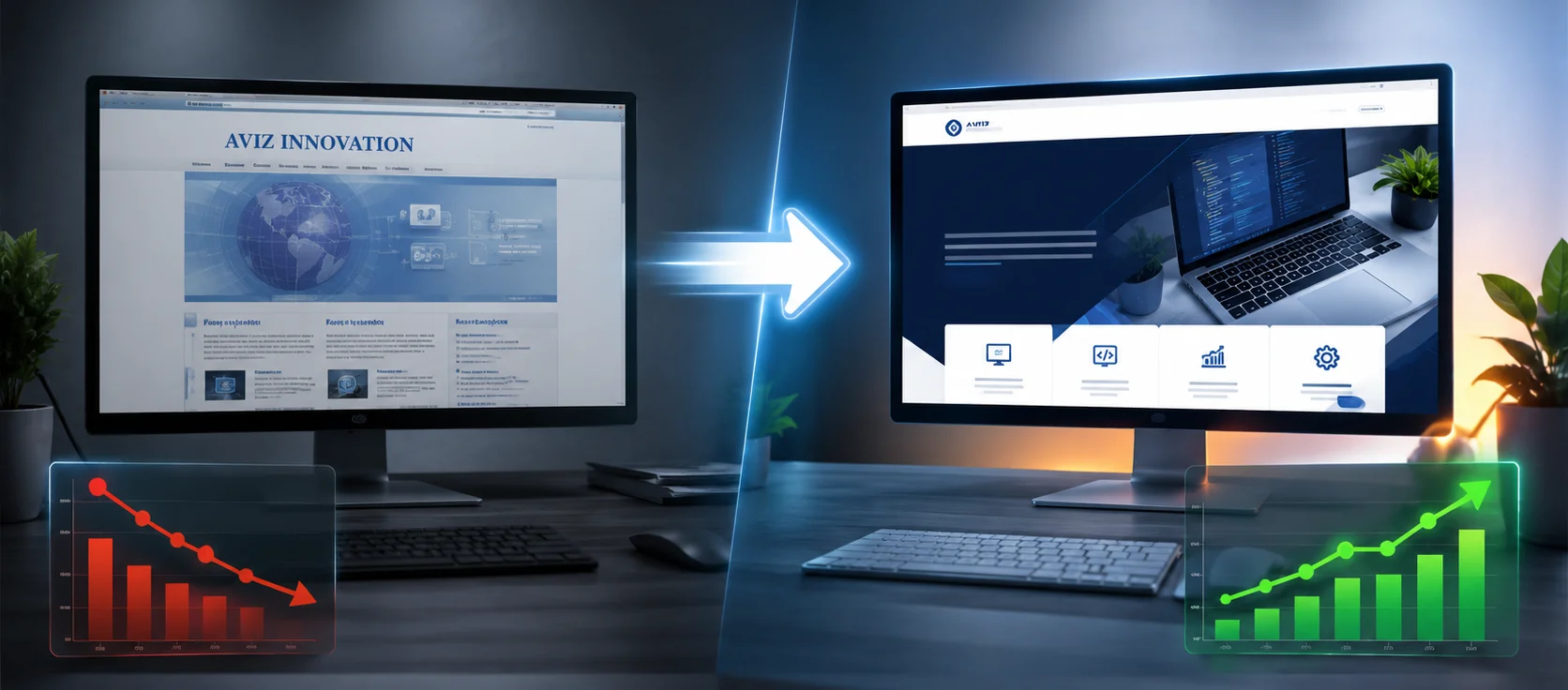
    Most businesses do not think about their website until something goes wrong. Traffic starts dropping, leads slow down, or a customer mentions the site looks outdated compared to a competitor. By then, the redesign is overdue.

    The truth is, a website is not something you build once and forget about. It ages the same way anything else does. Design trends move on, technology changes, your business grows, and customer expectations keep rising. This post walks through how to tell when your site actually needs a rebuild, and gives you a practical checklist to work through before you start.

    How Often Should a Website Actually Be Redesigned

    There is no fixed rule, but most businesses find they need a real redesign somewhere between two to four years. That said, timing should be based on signals from your site and your business, not just a calendar reminder. A site that is performing well and still feels current might not need a full rebuild even after four years. One that is struggling might need attention after just one.

    Signs It Is Time to Rebuild Your Website

    Your Traffic or Conversions Are Dropping

    If visitor numbers or conversion rates have been sliding without a clear external reason, your website itself might be the problem. Search engines reward sites that are fast, well structured, and genuinely useful. If yours is not keeping up, both traffic and results will slowly decline.

    It Does Not Work Well on Mobile

    More visitors browse on their phone than on a desktop these days. If your site is hard to navigate on a small screen, loads slowly, or has buttons that are difficult to tap, you are losing people before they even get a chance to consider your business.

    The Design Feels Outdated

    Design trends shift, and visitors notice more than they realize. An old looking website can quietly damage trust, even if your product or service is excellent. People often judge credibility within seconds of landing on a page.

    It Is Slow to Load

    Page speed affects both user experience and search rankings. If your site takes several seconds to load, visitors are likely leaving before it even finishes rendering.

    Updating Content Is a Hassle

    If adding a blog post, updating a price, or changing an image requires calling a developer every time, your site is holding your team back. A well built site should let you manage content without friction.

    It Does Not Reflect Your Business Anymore

    Businesses evolve. If you have added new services, rebranded, or shifted your target audience, but your website still reflects who you were two or three years ago, it is sending the wrong message to potential customers.

    You Are Losing Leads to Competitors

    If competitors with clearly weaker products are outperforming you online, take a hard look at their website compared to yours. Sometimes the difference in results comes down to the difference in the site itself.

    It Is Not Accessible

    If your website does not work well for visitors using screen readers, keyboard navigation, or has poor color contrast, you are excluding a portion of your audience and potentially exposing your business to legal risk as accessibility standards get stricter.

    Security or Technical Issues Keep Coming Up

    Frequent bugs, outdated plugins, or security warnings are signs the foundation of your site needs more than a patch. At some point, rebuilding becomes more cost effective than continuously repairing an aging system.

    The Website Redesign Checklist

    Once you have decided a rebuild makes sense, work through this checklist before development begins.

    ✓ Define your goals

    Get clear on what the new site actually needs to achieve. More leads, more sales, better brand perception, easier content management, or all of the above.

    ✓ Audit your current site

    Look at analytics, heatmaps, and user feedback to understand what is working and what is not. Do not throw away parts of the site that are already performing well.

    ✓ Review your target audience

    Confirm who your customers actually are today. Their needs, habits, and expectations may have shifted since your last build.

    ✓ Assess your content

    Decide what stays, what gets rewritten, and what gets removed entirely. Old content that no longer reflects your business should not simply be carried over.

    ✓ Check your SEO foundation

    Make a list of your top performing pages and keywords so nothing important gets lost or broken during the rebuild.

    ✓ Plan your site structure

    Map out a clear navigation and page hierarchy before any design work starts. Good structure makes everything downstream easier.

    ✓ Choose the right platform

    Decide whether a custom build, a flexible CMS, or a hybrid approach best fits your business needs and future plans.

    ✓ Prioritize mobile design

    Design for smaller screens first, then scale up, rather than treating mobile as an afterthought.

    ✓ Plan for speed from the start

    Optimize images, code, and hosting decisions early rather than trying to fix speed issues after launch.

    ✓ Build in accessibility

    Include proper contrast, alt text, keyboard navigation, and screen reader support as part of the core build, not a later addition.

    ✓ Set up tracking and analytics

    Make sure conversion tracking, goals, and analytics are properly configured before the site goes live, not weeks after.

    ✓ Test thoroughly before launch

    Check every page, form, and link across different browsers and devices. A rushed launch often creates more work later.

    ✓ Plan your redirects

    If URLs are changing, set up proper redirects so you do not lose existing search rankings or send visitors to broken pages.

    ✓ Prepare a maintenance plan

    Decide who will keep the site updated, secure, and improving after launch. A website is an ongoing project, not a one time deliverable.

    Rebuild With a Clear Reason, Not Just a Trend

    A redesign should always solve a real problem or support a real goal, not happen simply because a new design trend caught your eye. The businesses that get the most value out of a rebuild are the ones that go in with clear goals, a solid understanding of their audience, and a plan that covers both design and the technical foundation underneath it.

    Your website is often the first real interaction someone has with your business. Making sure it is fast, current, and built around what your customers actually need is not just a design decision. It is a business decision.

  • Why Your Website Still Matters in the Age of AI Search

    Why Your Website Still Matters in the Age of AI Search

    Artificial intelligence is changing the way people search for information online.

    Instead of simply typing a few words into Google and browsing through search results, people are increasingly asking longer and more detailed questions. AI-powered search experiences can now provide direct answers, summaries, recommendations and links to websites that support the information provided.

    For small businesses, this change can feel worrying. If customers can get answers directly from AI, do you still need a website?

    The answer is yes. Your website is more important than ever.

    Your website remains the place where potential customers can learn about your business, understand your services, see what makes you different, build confidence in your brand and ultimately decide whether to contact or buy from you.

    Google’s current guidance confirms that traditional SEO fundamentals continue to matter for AI Search, including accessible content, crawlability, useful information and a good page experience.

    AI Search Is Changing, But Websites Are Not Going Away

    AI Search is changing how people discover information, but it has not removed the need for websites.

    AI-powered search experiences can provide answers while also showing links to relevant websites. This creates new opportunities for businesses to be discovered by potential customers who may not use traditional search in exactly the same way.

    This means your website can become part of the information that AI-powered search experiences use to understand your business and provide relevant results.

    Think of it this way:

    Google and AI can help people discover you. Your website helps them choose you.

    That distinction is extremely important for small businesses.

    Your Website Builds Trust

    Imagine a potential customer searches for a local service and discovers your business through Google or an AI-powered search tool.

    What happens next?

    They may visit your website to answer questions such as:

    • Who are you?
    • What services do you provide?
    • Where are you based?
    • How much experience do you have?
    • Can I trust your business?
    • What do your customers say about you?
    • How can I contact you?

    A professional website gives you the opportunity to answer these questions clearly.

    A poorly designed, outdated or slow website can have the opposite effect. Even if your business provides excellent services, an unprofessional online presence can make potential customers question your credibility.

    Your website is often the digital first impression of your business.

    AI Search Makes Good Website Content Even More Important

    One of the biggest changes brought by AI Search is the way people ask questions.

    Instead of searching for something broad such as:

    “Website designer”

    A customer might ask:

    • “Who provides affordable professional website design for a small business?”
    • “What should I look for when choosing a website designer for my local business?”
    • “How much does a professional small business website cost?”

    This creates an opportunity for businesses that publish clear, useful and relevant information on their websites.

    Your website should not simply contain a list of services. It should answer the questions your customers are actually asking.

    Your Website Gives Your Business a Digital Home

    Social media platforms are useful for reaching people, but you do not fully control those platforms.

    Algorithms change. Features change. Advertising costs change. Organic reach can also fluctuate.

    Your website is different. It gives your business a digital home that you control.

    You can use it to showcase:

    • Your services
    • Your products
    • Your portfolio
    • Customer reviews
    • Case studies
    • Business information
    • Frequently asked questions
    • Contact details
    • Booking forms
    • Online payments
    • Helpful blog articles

    You can also connect your website with Google Business Profile, social media, email marketing, online advertising and other digital channels.

    Your website therefore becomes the central point connecting your entire online presence.

    SEO Still Matters in the Age of AI Search

    Some businesses assume that AI Search means traditional SEO is no longer important.

    That is not the case.

    Traditional SEO best practices continue to support visibility in AI-powered search experiences. Your pages still need to be accessible, crawlable, indexable and useful.

    This means businesses should continue focusing on fundamental SEO, including:

    • Helpful and original content
    • Clear website structure
    • Relevant page titles
    • Useful headings
    • Internal links
    • Fast and responsive pages
    • Mobile-friendly design
    • Crawlable content
    • Descriptive images and alt text
    • Accurate business information
    • A strong local SEO presence

    There is no magic “AI SEO” button that guarantees visibility. Businesses should focus on creating useful content and providing a strong experience for real visitors.

    Your Website Helps AI Understand Your Business

    AI-powered search needs reliable information to understand businesses and answer users’ questions.

    A clear website makes it easier to communicate:

    • What you do
    • Who you help
    • Where you operate
    • What makes you different
    • What services you provide
    • How customers can contact you

    For example, instead of simply writing:

    “We provide digital solutions.”

    a small business could clearly explain:

    “We provide professional website design, SEO and digital marketing services for small businesses looking to attract more customers online.”

    The second version provides much more useful context.

    Clear communication benefits both your customers and search systems.

    Your Website Should Be Built for People First

    It can be tempting to focus entirely on keywords and search rankings.

    However, SEO should never come at the expense of your visitors.

    Your website should answer a simple question:

    “Will this page genuinely help my customer?”

    If the answer is yes, you are moving in the right direction.

    Write naturally. Explain your services clearly. Use real examples. Answer common questions. Show your experience. Make your contact information easy to find.

    Most importantly, give visitors a reason to trust your business.

    AI Search Is an Opportunity, Not a Threat

    The rise of AI Search may change how customers discover businesses, but the fundamental purpose of your website remains the same.

    Your website is where your brand, expertise, services, content and customer experience come together.

    AI can help someone discover your business.

    Google can help someone find you.

    Social media can help someone notice you.

    But your website can help that person decide to become a customer.

    That is why your website still matters in the age of AI Search.

    Final Thoughts

    The future of online search is changing quickly. AI-powered search experiences are creating new ways for people to discover information and businesses.

    But this does not mean traditional websites, SEO or professional web design are becoming irrelevant.

    In fact, having a professional, useful, fast and SEO-friendly website gives your business a strong foundation for both traditional search and the evolving world of AI Search.

    The businesses that are likely to benefit most will not simply chase every new AI trend. They will focus on what has always mattered: providing useful information, building trust, creating a great customer experience and making it easy for people to take action.

    Your website is not just a place to be found. It is where you turn attention into trust, and trust into business.

    How AVIZ Innovation Can Help

    At AVIZ Innovation, we help small businesses build professional websites designed to create a stronger online presence and support business growth.

    From website design and development to SEO and content writing, we provide practical digital solutions designed around your business goals.

    If your website looks outdated, is difficult to use or is not generating the enquiries you expect, it may be time for a fresh approach.

    A better website can be the first step towards better online growth.

    Frequently Asked Questions

    Do I still need a website if customers use AI Search?

    Yes. AI Search can help customers discover information about your business, but your website provides the detailed information, brand experience and trust signals that help potential customers decide whether to contact or buy from you.

    Does SEO still matter for AI Search?

    Yes. Foundational SEO practices continue to support visibility in AI-powered search experiences. Your pages still need to be accessible, crawlable, indexable and useful.

    How can I make my website more visible in AI Search?

    Start with the fundamentals: create helpful and original content, maintain a technically accessible website, provide a good page experience, use a clear website structure and keep your business information accurate.

    Is AI-generated content good for SEO?

    AI can be useful for research, planning and assisting with content creation, but simply producing large amounts of low-value AI content is not a good SEO strategy. Focus on accuracy, quality, relevance and content that provides genuine value to your visitors.

    Should a small business invest in a professional website in 2026?

    Yes. A professional website can help establish credibility, explain your services, support SEO, generate enquiries and provide a central online presence for your business across search, social media and other marketing channels.

  • What Is an AI-Ready Website and Why Does Your Business Need One?

    What Is an AI-Ready Website and Why Does Your Business Need One?

    The way people find businesses online is changing.

    For many years, having a well-designed website and appearing on Google was enough to build a strong online presence. Today, people are increasingly using AI-powered tools and search experiences to find information, compare businesses, ask questions and decide what to buy or who to contact.

    This creates a new question for business owners:

    Is your website ready for AI?

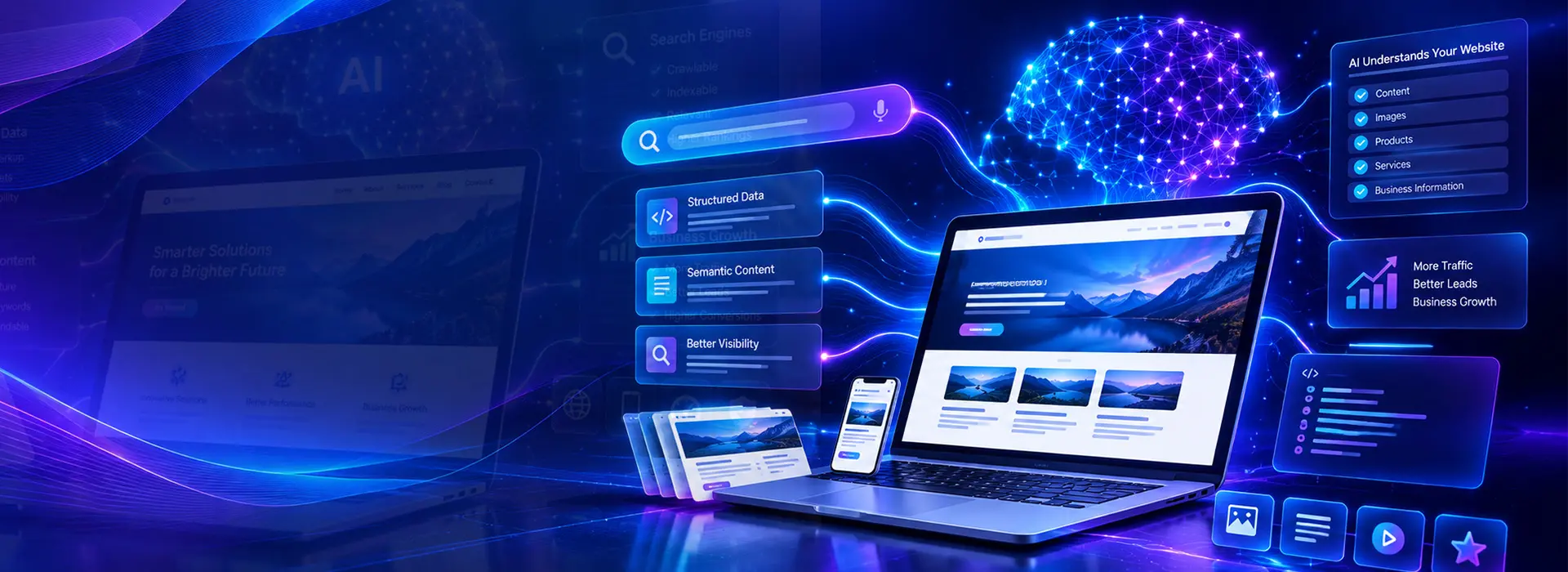
    An AI-ready website is not simply a website with an AI chatbot added to it. It is a website that is structured, written and developed in a way that makes it easier for search engines, AI systems and AI-powered tools to understand your business, your services and the information you provide.

    What Does “AI-Ready Website” Actually Mean?

    An AI-ready website is designed to work well for both people and machines.

    Traditional website development often focuses on how a website looks and functions for visitors. These things are still extremely important, but businesses now also need to think about how clearly their website communicates information to search engines and AI systems.

    For example, an AI system should be able to understand:

    • What your business does
    • Which products or services you offer
    • Where you are located
    • Who you serve
    • How customers can contact you
    • What makes your business different
    • Your opening hours
    • Your frequently asked questions
    • Your pricing or service information, where appropriate
    • Your reviews and business information
    • Which pages contain the most important information

    The clearer this information is, the easier it can be for technology to interpret and use.

    Why Is AI Readiness Becoming Important?

    Search is changing.

    People are no longer relying only on traditional search results. They are also asking AI-powered systems questions such as:

    • “Who provides website design for small businesses?”
    • “What is the best type of website for a local building company?”
    • “Find a roofing company that provides online quotations.”
    • “Which local businesses offer this service?”

    Instead of simply displaying a list of links, AI-powered search experiences can provide direct answers and may refer users to relevant businesses or sources.

    This means your website has another job.

    It should not only attract visitors. It should also clearly communicate your business information to the systems helping people discover you.

    AI-Ready Does Not Mean “AI Will Automatically Rank My Website”

    This is an important distinction.

    There is no guaranteed formula that makes a website appear in every AI-generated answer.

    AI search visibility depends on many factors, including the quality and relevance of your content, the authority and credibility of your business, technical website factors, structured information and information available across the wider web.

    An AI-ready website simply gives your business a stronger technical and content foundation.

    It is about making your business information clear, accessible, useful and trustworthy.

    7 Important Elements of an AI-Ready Website

    1. Clear and Well-Structured Content

    AI systems need to understand the meaning and context of your content.

    Instead of filling your website with generic marketing statements, explain your services clearly.

    For example, instead of:

    “We deliver innovative solutions for your business.”

    You could say:

    “We provide professional roof repair and replacement services for residential and commercial properties across Manchester.”

    The second statement provides much more useful information.

    Good website content should answer the questions your potential customers are actually asking.

    2. A Clear Website Structure

    Your website should have a logical structure.

    Important services should have dedicated pages where appropriate. Navigation should be easy to understand, and related information should be logically connected.

    For example:

    Home → Services → Website Design → WordPress Website Design

    This helps visitors navigate your website and also gives search engines and other systems clearer context about your content.

    3. Proper Technical SEO

    AI readiness does not replace SEO.

    Technical SEO remains an important part of a healthy website.

    This includes areas such as:

    • Crawlable pages
    • Proper heading structure
    • Descriptive page titles
    • Meta descriptions
    • Clean URLs
    • Internal linking
    • Mobile responsiveness
    • Fast loading times
    • Accessible content
    • XML sitemap
    • Appropriate robots.txt configuration
    • Secure HTTPS
    • Proper canonicalisation

    A technically poor website can make it harder for search engines and other systems to discover and interpret your content.

    4. Structured Data and Schema Markup

    Your website contains information that can be difficult for machines to interpret without additional context.

    Structured data can help describe things such as:

    • Your organisation
    • Local business details
    • Products
    • Services
    • Reviews
    • Events
    • FAQs
    • Articles
    • Locations

    For example, a local business website can provide structured information about its name, address, telephone number, opening hours and services.

    This does not guarantee enhanced search visibility, but it can provide search engines with clearer information about the content of your website.

    5. Helpful FAQs

    FAQs are becoming increasingly valuable because they address the questions customers naturally ask.

    Instead of creating FAQs purely for SEO, think about real customer questions.

    • How much does a business website cost?
    • How long does a website take to build?
    • Can you redesign my existing website?
    • Will I own my website?
    • Can you help with SEO after the website is launched?

    This type of content can help both potential customers and systems trying to understand your business.

    6. Strong Business Identity and Trust Signals

    AI systems do not look at your website in isolation.

    Your business information may exist across search engines, directories, social media platforms, review websites and other online sources.

    If your business name, address, telephone number and other important details are inconsistent, it can create confusion.

    Your website should therefore clearly establish:

    • Who you are
    • What you do
    • Where you operate
    • How customers can contact you
    • Your experience and expertise
    • Your services
    • Your business credentials
    • Genuine customer reviews and testimonials

    A professional About page and clearly presented business information can also help establish context and trust.

    7. Fast, Mobile-Friendly and Accessible Design

    AI readiness should never come at the expense of human visitors.

    Your website still needs to be fast, responsive and easy to use.

    Most importantly, people should be able to find what they need quickly.

    A visitor should not have to search through five pages just to find your telephone number or understand what service you provide.

    Good accessibility practices are also valuable. Proper headings, meaningful links, readable content, image alternative text and semantic HTML can make content easier for different users and technologies to understand.

    What Happens If Your Website Is Not AI-Ready?

    There is no single consequence that applies to every website.

    However, an unclear or poorly structured website can make it more difficult for search engines and AI systems to understand the business accurately.

    Consider a website where:

    • Services are only listed as images
    • Important information is buried inside large blocks of text
    • Pages have unclear titles
    • Business information is inconsistent
    • There is very little useful content
    • The website is difficult to navigate
    • Mobile users struggle to use it
    • Pages load slowly
    • Important services do not have dedicated pages
    • The website contains outdated information

    The problem is not simply that the website looks old.

    The bigger issue is that your website may not be communicating your business as clearly as it could.

    AI-Ready Website vs Traditional Website

    The difference is not necessarily that one website uses AI and the other does not.

    A modern AI-ready website can still be a normal WordPress or business website.

    The difference is in the way it is planned and developed.

    Traditional ApproachAI-Ready Approach
    Focus mainly on visual designFocus on design, content and machine understanding
    Basic service informationDetailed and clearly structured service information
    SEO considered separatelySEO integrated into website structure
    Content written mainly for keywordsContent written for users and genuine search intent
    Basic business informationClear and consistent business information
    Desktop-first thinkingMobile-first and accessible
    Website treated as a brochureWebsite treated as a source of business information
    Traditional search focusPrepared for traditional and AI-powered search

    Does an AI-Ready Website Need an AI Chatbot?

    No.

    This is one of the most common misunderstandings.

    A chatbot can be useful for certain businesses, but an AI-ready website does not require one.

    A website can be AI-ready without having any visible AI functionality.

    The foundation is good website development, clear content, structured information, technical SEO, accessibility, performance and a strong business identity.

    AI tools can then be added where they provide genuine value.

    • AI customer support
    • AI-powered FAQs
    • Lead qualification
    • Product recommendations
    • Appointment assistance
    • Content personalisation
    • Automated customer enquiries

    The technology should support the business rather than being added simply because AI is currently popular.

    How Can You Check Whether Your Website Is AI-Ready?

    Start with a simple test.

    Can someone understand my business within 10 seconds of visiting my website?

    Then ask:

    • Is it immediately clear what we do?
    • Are our main services easy to find?
    • Is our location clear?
    • Can visitors quickly contact us?
    • Does every important service have useful information?
    • Are our FAQs based on real customer questions?
    • Is our website mobile-friendly?
    • Does it load quickly?
    • Is the content easy to understand?
    • Is our business information consistent online?
    • Does the website use structured data where appropriate?
    • Are important pages accessible to search engines?
    • Is our website regularly updated?

    If several answers are “no”, your website may need more than a visual redesign. It may need a complete website and content review.

    The Future of Business Websites

    The role of a website is changing.

    It is no longer simply an online brochure containing your company details.

    Your website can become the central source of information about your business, connecting customers, search engines, AI systems, social platforms and other digital services.

    As AI-powered search and AI agents become more common, businesses will need websites that are:

    • Useful.
    • Accessible.
    • Fast.
    • Structured.
    • Trustworthy.
    • Easy to understand.
    • Ready for changing search behaviour.

    The businesses that start preparing their websites now can build a stronger foundation for the future.


    Final Thoughts

    An AI-ready website is not about trying to manipulate AI or finding a shortcut to appear in AI-generated answers.

    It is about doing the fundamentals properly and preparing your website for the way people increasingly discover and interact with businesses online.

    Your website should clearly explain who you are, what you offer, who you help and how people can take the next step.

    When that information is well structured and supported by good technical foundations, your website becomes more useful to customers and easier for modern search technologies to understand.

    The future of websites is not humans versus AI. It is websites that work better for both.

    Is Your Website Ready for the Future?

    At AVIZ Innovation, we help small businesses create modern, professional websites with a focus on design, performance, SEO, content and long-term usability.

    If your existing website looks outdated, is difficult to navigate, performs poorly or does not clearly communicate your services, it may be time to review more than just the design.

    Your next website should not only look good. It should be built to work harder for your business.

    Talk to AVIZ Innovation about your website